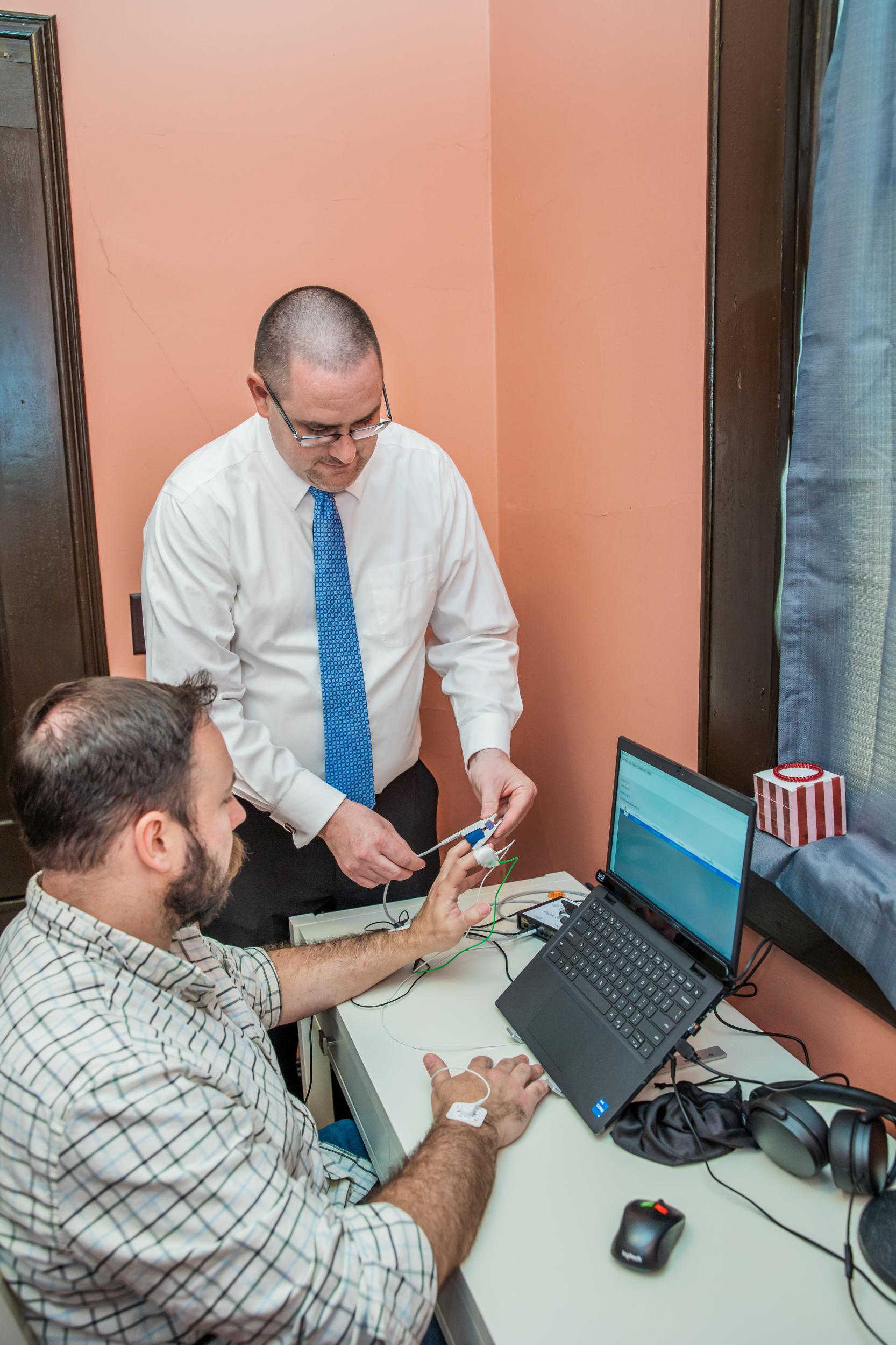
EyeDetect® is a next-generation credibility assessment tool that measures subtle changes in eye behavior to help detect deception. Developed by scientists at the University of Utah, the technology has continued to evolve through research and refinement.
EyeDetect offers a streamlined and less intrusive approach while still providing useful data for both screening and diagnostic purposes.
What does EyeDetect do?
EyeDetect technology can be used to assess job applicants, employees, patients, parolees, drug users, athletes, criminal suspects, and others regarding specific issues or concerns in as little as 15 to 30 minutes.
It may be used for broad screening on general topics, as well as for diagnostic or single-issue testing in criminal and civil matters.
EyeDetect+ 2.0 evaluates credibility by monitoring and recording physiological activity—similar to a polygraph—while also capturing the ocular data used in a standard EyeDetect assessment.
√ An optimized convergence of testing protocols
√ Additional, improved diagnostic data channels
√ New, improved, and less intrusive sensors
…which means more reliable testing and valid data analysis
Functionally Identical to Polygraph

Stephen P. Lowery, BA, MISM
EyeDetect+ uses testing protocols similar to those used in polygraph examinations, making it easier for trained examiners to transition to this innovative technology. Because data recording and scoring are performed automatically by the computer, examiners are able to focus more fully on the pre-test and post-test interview process.
The EyeDetect+ Station includes a device called the Physio Tracker, which connects simple sensors to a person’s fingers, wrists, and abdomen during testing.
These sensors automatically record data similar to a polygraph, including:
- Blood pressure (no arm cuff)
- Electrodermal Activity (EDA)
- Cardiovascular Activity such as heart rate
- Respiration Activity
- Body Movements
EyeDetect+ provides a modern, data-driven option for credibility assessment while reducing the physical intrusiveness often associated with older testing methods.